
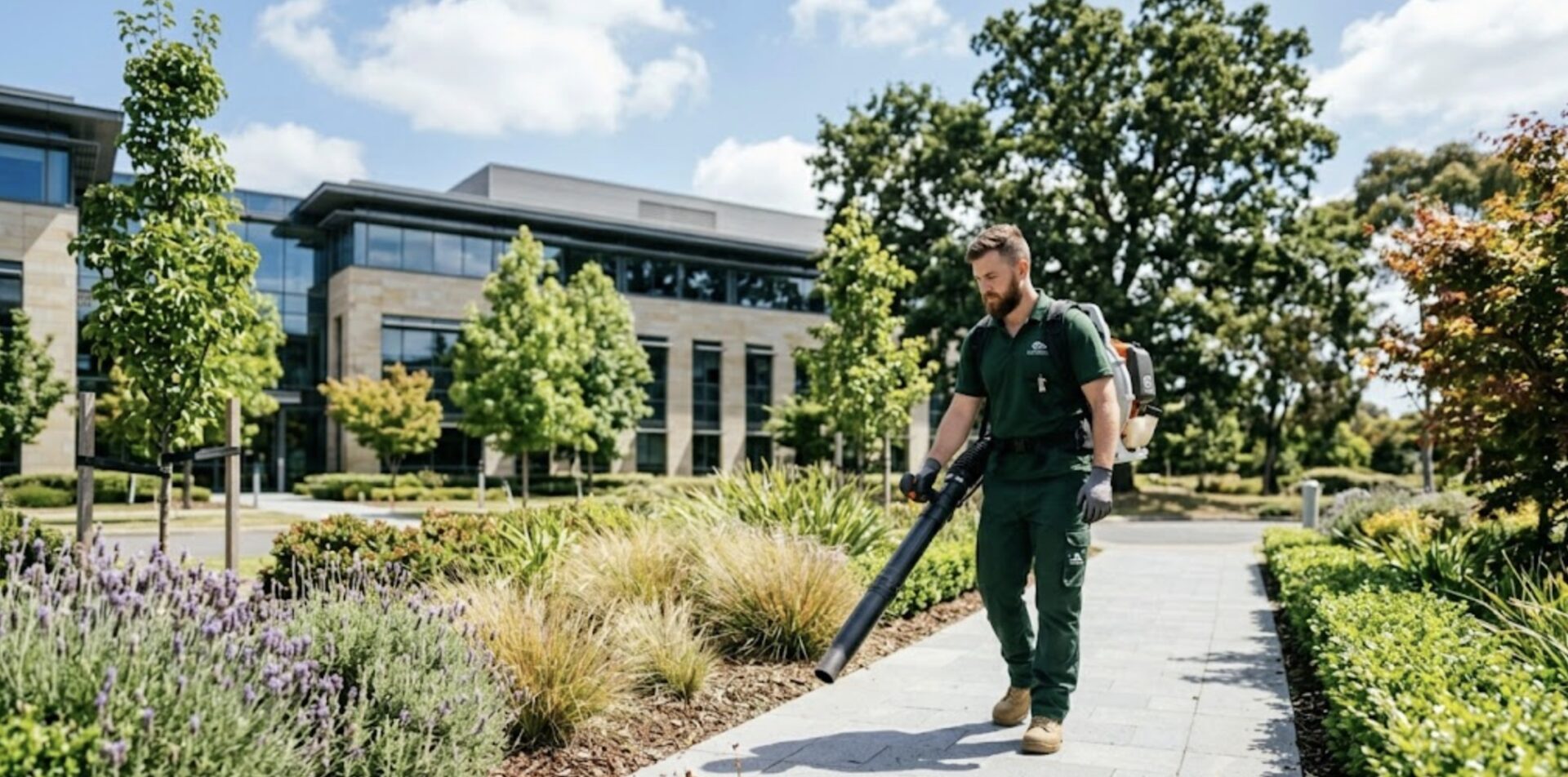
Does your commercial property’s outdoor space ever cross your mind as a genuine business asset worth protecting?
For most Perth business owners and property managers, gardens and grounds are an afterthought until something goes wrong. But the reality is that poorly maintained outdoor spaces don’t just look neglected; they actively cause damage to the infrastructure around them. Tree roots crack paving, overgrown vegetation blocks drainage, and unchecked moisture accelerates surface deterioration.
At Externals Landscape Services, we see these problems regularly, and we know how avoidable they are with the right maintenance program in place.
The Hidden Cost of Neglected Commercial Grounds
Most people think of garden maintenance as a cosmetic concern. The lawn looks a bit rough, the hedges need a trim, the garden beds are getting weedy. Easy enough to push down the priority list when there are bigger business decisions to focus on. But what’s happening beneath the surface, and along the edges of paths, walls, and structures, tells a very different story.
Neglected grounds don’t just look bad. They cost money, and often a lot more than the maintenance program that would have prevented the damage in the first place.
The Compounding Nature of Deferred Maintenance
One of the most important things to understand about commercial grounds maintenance is that skipping it doesn’t save money, it defers costs and multiplies them. A cracked paver caused by an encroaching tree root is a minor fix early on. Left alone for another season, that same root system can undermine an entire pathway, requiring full excavation and reinstatement at significant expense.
The same logic applies to garden beds, lawn areas, drainage channels, and planted borders. Small issues compound quietly until they become unavoidable and expensive.
Aesthetic Decline Affects More Than Appearances
There’s a direct line between the condition of a commercial property’s grounds and how clients, tenants, and visitors perceive the business operating from it. A well-presented exterior builds confidence. A neglected one raises questions about standards across the board.
What Neglect Actually Costs a Business
Beyond repairs, there are broader costs to consider, including liability exposure from hazardous surfaces, reduced property value, strata or council compliance issues, and the harder-to-measure cost of a weakened first impression on every person who walks through the gate.
Why Prevention Always Wins
Consistent maintenance is always cheaper than reactive repair. Investing in regular grounds care is simply smarter asset management.
How Overgrown Vegetation Damages Structures and Surfaces
It’s easy to underestimate what a plant can do to a building. Vegetation looks soft, slow-moving, and harmless. But given enough time and the right conditions, roots, stems, and moisture-retaining foliage can cause serious structural damage to the hard surfaces and built elements that make up a commercial property. This is one of the most overlooked dimensions of grounds management, and one of the most expensive to fix once it takes hold.
The key to avoiding this kind of damage is understanding exactly how it happens, and making sure someone is actively watching for the early signs before they escalate.
Roots and the Damage They Do Underground
Tree and shrub roots follow water and space. On commercial properties, that often means they find their way into paving joints, beneath concrete slabs, along retaining wall footings, and into underground drainage lines. The pressure a root system exerts as it grows is considerable, and it doesn’t stop. Cracked footpaths, lifted pavers, bulging retaining walls, and blocked stormwater pipes are all common outcomes of root systems that were never properly managed.
To keep your commercial grounds looking professional and structurally sound, vegetation needs to be monitored and managed well before root systems reach critical infrastructure.
Climbing Plants and Surface Deterioration
Creepers and climbing plants are popular in commercial landscaping for good reason. They add visual softness to hard surfaces and can look striking against a rendered wall or fence line. But without regular management, they become a liability. Climbing species anchor themselves into mortar joints, render, and timber, and as they grow heavier, they pull at the surfaces they’re attached to. Moisture trapped behind dense foliage also accelerates the deterioration of walls and fencing over time.
Overhanging Canopy and Its Impact on Hard Surfaces
Trees that extend over paved areas, car parks, or building rooflines create their own set of problems. Leaf litter accumulates in gutters and drainage points, organic matter breaks down on paving and creates slip hazards, and sap or fruit drop can stain and degrade surface finishes. Over time, the constant presence of moisture and organic debris beneath a heavy canopy softens paving substrates and encourages the growth of moss and algae.
What to Watch For Before Small Problems Become Big Repairs
Catching vegetation-related damage early is entirely possible when regular site inspections are built into a maintenance program. The good news is that the warning signs are almost always visible well before serious structural damage sets in, and a trained maintenance team will know exactly what to look for during every visit:
- Paving joints that are lifting, cracking, or showing organic growth pushing through
- Retaining walls with visible bowing, cracking, or mortar deterioration along the base
- Gutters and downpipes that repeatedly block despite being cleared
- Wall surfaces with staining, render bubbling, or patches of persistent dampness
- Timber fencing or structures showing accelerated rot where vegetation is in contact
A maintenance team that knows what to look for will flag these issues during routine visits, giving property managers the chance to act early and keep repair costs manageable.
Protecting Drainage, Irrigation and Underground Infrastructure
When most people picture garden maintenance, they think about what’s visible above ground. The lawn, the hedges, the garden beds. But some of the most valuable work a maintenance program does happens at ground level and below it, protecting the drainage and irrigation infrastructure that keeps a commercial property functioning properly all year round.
In Perth’s climate particularly, where summer puts enormous pressure on irrigation systems and winter brings concentrated rainfall after months of dry ground, the condition of a property’s water management infrastructure matters enormously. A site that drains poorly or irrigates inefficiently isn’t just inconvenient; it’s actively causing damage every time it rains or every time the reticulation runs.
How Poor Drainage Damages a Commercial Property
Water that doesn’t drain correctly has to go somewhere. On commercial properties, that usually means it pools against building foundations, saturates lawn and garden bed substrates, undermines paving base layers, or backs up into areas where it creates slip hazards and ongoing moisture damage. Over time, consistently poor drainage causes far more structural harm than most property managers realise until the repair bill arrives.
Blocked drainage channels are one of the most common culprits, and one of the most preventable. Leaf litter, soil runoff from garden beds, and root ingress into drainage lines are all issues that routine maintenance catches and addresses before they cause serious problems. When we improve the appearance of your commercial property, we’re also making sure the underlying systems that support it are working as they should.
Irrigation Systems and the Cost of Neglect
A reticulation system that isn’t regularly checked will develop faults quietly. A single blocked or misaligned head can leave a section of lawn or garden bed without water for weeks before anyone notices. A slow leak in a lateral line wastes water continuously and can saturate a localised area to the point of damaging plant root systems and softening paving substrates beneath the surface.
Regular irrigation audits carried out as part of a maintenance program identify these faults early. Heads are checked for coverage and alignment, pressure is tested across zones, timers are adjusted seasonally to match plant water requirements and council water restriction schedules, and any leaks or blockages are flagged for repair before they escalate.
The Relationship Between Plant Health and Infrastructure Integrity
Healthy, well-maintained planting actually supports infrastructure rather than threatening it. Plants that are properly pruned, mulched, and watered develop root systems that stay within their intended zones. Garden beds that are regularly edged and mulched retain moisture more efficiently, reducing the amount of irrigation required and minimising soil runoff into drainage points.
Conversely, stressed or overgrown plants are more likely to develop aggressive root systems searching for water, more likely to shed heavy debris into drainage channels, and more likely to create the kind of moisture imbalances that accelerate surface and structural deterioration.
Proactive Infrastructure Checks as Part of Routine Maintenance
The most effective way to protect drainage and irrigation infrastructure is to have trained eyes on it regularly. A maintenance team that understands how these systems work will incorporate infrastructure checks into every visit rather than treating grounds care as purely a visual exercise. Spotting a cracked irrigation line, a partially blocked drain, or a drainage channel filling with sediment during a routine service is the difference between a minor fix and a significant repair.
Tree and Shrub Management as a Safety and Liability Issue
Trees and shrubs are among the most valuable elements of any commercial landscape. They provide shade, visual structure, privacy screening, and a sense of maturity that younger plantings simply can’t replicate. But they’re also the element most likely to create serious safety and liability issues when they’re not properly managed. Unlike a weedy garden bed or an overgrown hedge, a structurally compromised tree or a heavily weighted overhanging limb poses a direct risk to people and property.
For commercial property managers and business owners, this is not a minor concern. It sits squarely in the territory of duty of care, and the consequences of getting it wrong can be significant.
Understanding the Risk Profile of Mature Trees
Not every tree on a commercial property presents the same level of risk, but all trees require some level of ongoing assessment. As trees mature, they develop structural characteristics that need monitoring, including co-dominant stems that can split under load, branches with weak attachment points, root systems that may be compromising nearby infrastructure, and canopy weight that shifts the tree’s centre of gravity over time.
In Perth’s climate, the combination of long dry summers and concentrated winter rainfall creates specific stress patterns in trees. Prolonged drought weakens root systems and makes trees more susceptible to wind throw when storms arrive. Working with reliable commercial landscaping professionals in Perth means having people on your maintenance team who understand these local conditions and know what to look for during routine inspections.
Shrub Management and Sightline Safety
Beyond trees, shrubs that are allowed to grow unchecked create their own category of safety concern on commercial properties. Overgrown shrubs along pedestrian pathways reduce visibility and can create concealed spaces that present personal safety risks, particularly in car parks, along building perimeters, and near entry and exit points.
From a practical standpoint, dense unchecked shrub growth also obscures signage, blocks security lighting, and interferes with CCTV sightlines. These are issues that go well beyond aesthetics and into the territory of operational and security management. Regular pruning keeps shrubs within their intended proportions, maintains clear sightlines across the property, and ensures lighting and signage remain unobstructed.
Seasonal Storm Preparation and Post-Storm Response
One of the most overlooked aspects of tree and shrub management is preparation ahead of storm season. Perth’s winter storm events can be damaging, and trees that haven’t been assessed and pruned going into that period carry a much higher risk of limb failure or full tree loss during high wind events.
A proactive maintenance program includes pre-winter crown assessments, removal of dead or structurally weak limbs, and where necessary, canopy reduction on trees that have grown beyond a safe size relative to their surroundings. After storm events, a rapid response to fallen limbs, uprooted plants, and storm debris is equally important to restore safety and presentation quickly.
Liability, Insurance and Documentation
From a liability perspective, commercial property owners and managers have a responsibility to take reasonable steps to identify and address known tree hazards. A documented maintenance program that includes regular tree inspections, records of work carried out, and evidence of proactive risk management is a meaningful asset if a liability question ever arises.
Working with a professional maintenance provider who keeps accurate service records and flags tree health concerns in writing gives property managers the documentation trail they need to demonstrate that appropriate care has been taken. It’s a detail that’s easy to overlook until it becomes critically important.
Building a Maintenance Program That Actually Protects Your Investment
There’s a significant difference between a commercial property that receives occasional garden visits and one that operates under a properly structured maintenance program. The first approach keeps things looking acceptable most of the time. The second actively protects the value of your outdoor infrastructure, reduces your liability exposure, and ensures your grounds are consistently presenting your business in the best possible light. For Perth businesses serious about asset protection, the distinction matters enormously.
Getting to that second outcome starts with choosing the right garden maintenance service and making sure the program they build for your property is genuinely tailored to what your site needs, not just what’s convenient to deliver.
A Tailored Program Delivers Better Protection and Better Value
Generic maintenance schedules might keep a property looking tidy on the surface, but they rarely account for the specific risks and requirements of an individual site. A commercial property with mature trees, extensive paving, and a complex irrigation system needs a fundamentally different program to a retail centre with predominantly lawn areas and low-growing planted borders.
A tailored program identifies the elements of your property that carry the highest risk, prioritises them accordingly, and builds a schedule around what actually needs to happen rather than a one-size-fits-all template. The benefit to you as a property owner or manager is straightforward: better outcomes, fewer surprises, and maintenance investment that’s directed where it delivers the most protection.
Consistency Is What Makes a Program Work
One of the clearest benefits of a structured maintenance program is the consistency it delivers over time. A property that is serviced regularly by a team that knows the site develops a maintenance history. The team understands which trees need watching, where drainage tends to back up after heavy rain, which sections of paving are showing early signs of root pressure, and which planted areas need seasonal intervention to stay healthy.
That accumulated site knowledge is genuinely valuable. It means issues are caught earlier, recommendations are more informed, and the maintenance program evolves intelligently as the property changes over time. A revolving door of different contractors can never deliver this, no matter how capable each individual provider might be.
Proactive Reporting Keeps You in Control
A well-run maintenance program doesn’t just carry out work, it keeps you informed. After each service visit, you should have a clear picture of what was done, what was observed, and what may need attention in the coming weeks or months. This kind of proactive reporting puts property managers in a position to plan ahead rather than react to problems after they’ve developed.
The benefit here extends beyond convenience. Documented service records support insurance claims, satisfy strata and council compliance requirements, and provide the paper trail that protects you if a liability question ever arises from a tree, surface, or drainage-related incident on your property.
The Long-Term Financial Case for Proper Maintenance
The financial argument for a structured maintenance program is straightforward when you look at the full picture. Regular maintenance costs are predictable and manageable. Reactive repairs to damaged paving, failed drainage infrastructure, storm-damaged trees, or deteriorated retaining walls are expensive, disruptive, and often avoidable.
Beyond direct repair costs, a well-maintained commercial property retains its value more effectively over time. Landscaping that has been properly cared for looks established and intentional. Landscaping that has been neglected and then reactively patched looks exactly like what it is. For businesses that own their premises, this has a direct impact on property value. For those leasing, it affects the terms and conditions of tenancy agreements and the relationship with building owners.
Partnering With a Team That Understands What’s at Stake
Ultimately, the quality of a commercial maintenance program comes down to the team delivering it. At Externals Landscape Services, we approach every commercial property as a long-term partnership rather than a series of individual service visits. We learn your site, we flag issues early, we keep you informed, and we build maintenance programs around what genuinely protects and enhances your investment over time.
The grounds around your business are worth looking after properly. We’re here to make sure that happens.
Your Outdoor Assets Deserve More Than a Quick Mow
Does your current garden maintenance program actually protect your property, or is it simply keeping up appearances?
There’s a real difference between the two, and for Perth businesses with serious outdoor infrastructure to look after, that difference shows up in repair bills, liability exposure, and long-term asset value. Proper commercial garden maintenance is proactive, structured, and genuinely invested in the health of your grounds over time.
At Externals Landscape Services, that’s exactly the standard we hold ourselves to with every client we work with. Get in touch today for a free consultation, and let’s build a program that truly protects what you’ve invested in.