
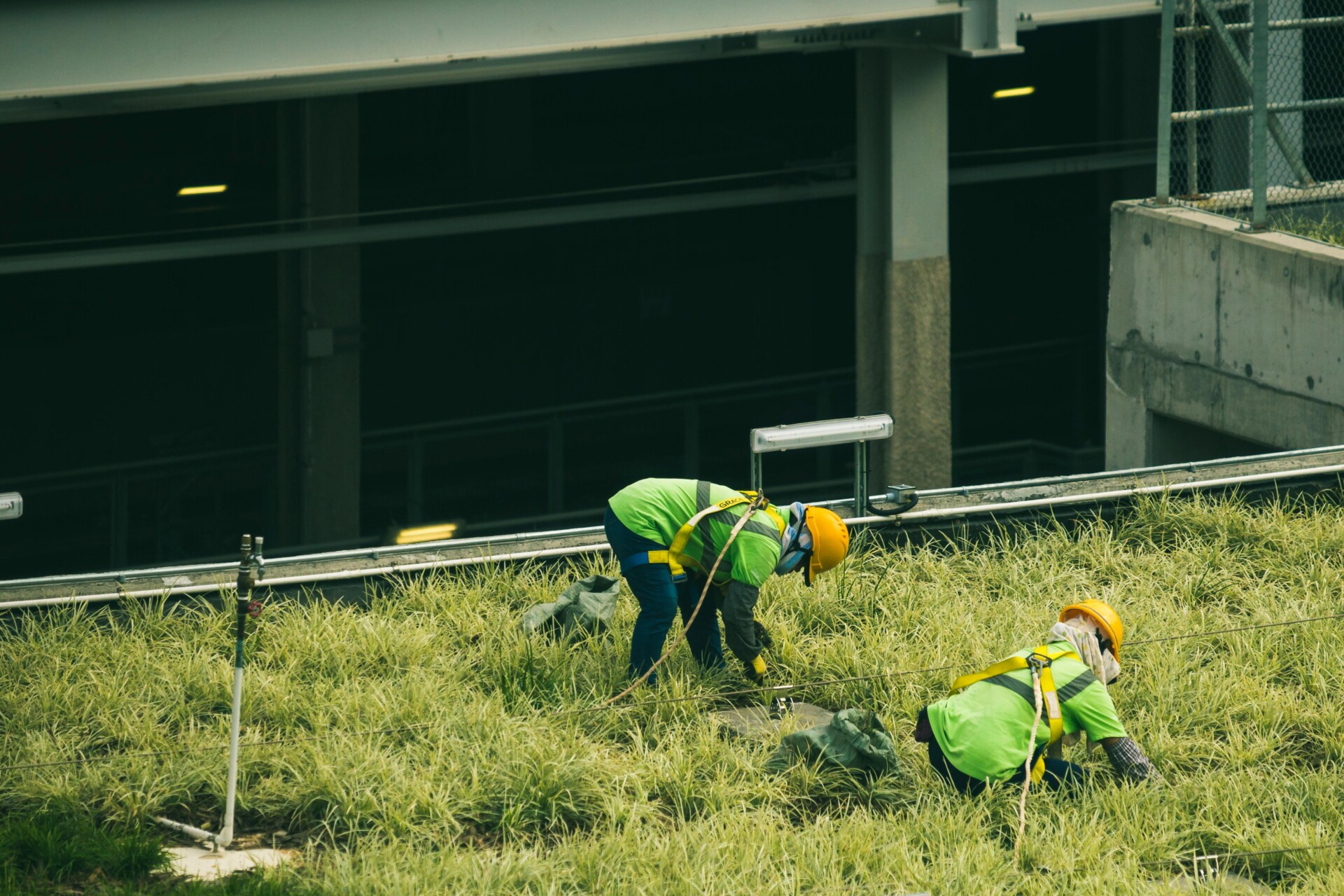
Large-scale commercial landscaping projects are a fundamentally different discipline from standard maintenance or small-scale installs within the landscaping industry. The scale, the stakeholder complexity and the operational demands are all significantly greater, and the margin for error is correspondingly smaller.
Successful commercial landscaping companies manage these projects through structured project management, dedicated specialist teams, trusted subcontractor networks and technology that keeps every moving part coordinated and on track.
These projects operate within strict health, safety and environmental regulations and are often delivered as part of broader commercial development projects. They require close coordination with builders, architects, engineers and commercial developers, and they need to align with broader construction timelines that rarely wait for landscaping.
From initial site assessment through to long-term maintenance contracts, every stage of a large project demands expert project management, proactive communication and a deep understanding of what commercial outdoor spaces require at each phase.
A Clear Project Management Structure From Day One
Every well-run large-scale commercial landscaping project starts with a management structure in place before any physical work begins.
A dedicated contract manager serves as the single point of contact throughout the entire project, working closely with internal teams and project managers to keep decisions fast, communication clear, and clients informed at every stage. A site supervisor handles daily on-site operations and reports directly to the contract manager, so large teams across a broad site stay aligned without constant intervention.
The project is broken into phased, time-bound stages with KPIs set at the outset. The site is divided into zones, hardscape is sequenced ahead of softscape, and planting windows are planned around Perth’s seasons and the broader construction program.
Site Assessment Before Any Work
Before a design is finalised or resources committed, a thorough site assessment is essential.
This covers soil composition, drainage, sun and wind exposure, existing vegetation, access, underground services and all council and environmental compliance requirements. In Perth, WA’s water management regulations, sandy soils and climate-specific plant selection all factor into this assessment.
Commercial landscape architects work from these findings to produce a plan that is both practical and achievable. All permits and approvals are secured at this stage, before construction begins. Contractors also coordinate with the project’s lead consultant group to understand staging, access constraints and sequencing that will affect the landscaping scope.
Working with commercial clients across Perth on complex projects requires this upfront alignment to avoid costly downstream disruptions.
Hardscape and Softscape are Properly Sequenced
On large commercial projects, landscape construction runs concurrently with building works, not after them.
Hardscape elements, including retaining walls, paving, pathways and drainage infrastructure, are installed in direct coordination with civil and building contractors, with clear handover milestones for each zone. Softscape installation follows once structural work is complete in each area, protecting new plants from construction damage and dust.
Contingency scheduling manages weather delays from the start, and drought-tolerant, locally appropriate plant selection reduces vulnerability to temperature and water stress during construction, which is particularly relevant on Perth sites where summer can arrive mid-project.
Quality Control and Proactive Communication
Quality control is not a final-stage activity on large commercial projects. It runs throughout.
Regular site audits verify work against design specifications, material finishes and commercial standards at every stage. Contract managers conduct both formal and informal quality checks, with findings documented and reported clearly to clients. This includes material and species verification before installation, installation quality checks across grading, drainage and irrigation, and photo documentation at each completed phase.
Proactive communication is non-negotiable. Clear milestone updates build client confidence, and any issues identified are addressed immediately rather than deferred, helping safeguard the overall property value of the asset.
Technology, Equipment and Resource Planning
Professional contractors use scheduling and project management software to coordinate crews, track progress, manage subcontractors and handle client billing with full transparency.
Resource allocation is locked in before mobilisation. The right staffing mix, equipment schedule and machinery requirements are all established upfront. Large projects typically draw on a combination of owned and leased plant, including excavators, bobcats, paving equipment and irrigation rigs. Staged invoicing aligned to milestones protects both parties from budget surprises throughout the project.
Smart IoT-integrated irrigation systems are increasingly standard on large commercial sites, monitoring water usage in real time, reducing overall environmental impact and delivering measurable gains over traditional timer-based approaches.
Sustainable Practices Built In From the Start
Sustainable landscaping practices are not an afterthought on large commercial projects in Perth. They are built into planning from the earliest stages.
Smart irrigation systems, waterwise-compliant planting and efficient reticulation design are baseline expectations today. Native plant selection reduces ongoing maintenance, improves plant health in WA conditions and removes dependence on heavy water and chemical input.
Eco-friendly materials are increasingly specified for hardscape, and responsible contractors manage site waste and protect existing vegetation throughout construction.
Long-Term Maintenance From the Outset
A large-scale project does not end at practical completion. It transitions into an ongoing maintenance commitment that protects presentation, usability and long-term property value.
Commercial landscaping services maintenance services should be scoped to cover both construction and the care that follows. Maintenance contracts typically include reticulation servicing, turf renovation, pruning, weed management, seasonal cleanups, tree care and response management for unscheduled issues. Pricing and scope are best agreed as part of the initial project conversation, not retrofitted after handover.
The best contractors build long-term site knowledge that allows them to anticipate and resolve issues before they become problems.
OH&S Compliance and Staff Qualifications
Rigorous OH&S policies are non-negotiable on any large commercial site.
This means site inductions, hazard identification protocols, safe machinery and chemical handling practices, and appropriate PPE for every task. Staff qualifications in chemical application, tree work, confined space and machinery operation must be current, documented and available on request.
A contractor who cannot demonstrate current OH&S policies and verified certifications should not be considered for a large commercial project, regardless of price.
Need More Information? Contact External Landscape Services Today!
Delivering large-scale commercial landscaping projects requires more than just execution. It demands structured project management, technical expertise, and a long-term approach to performance, compliance and site presentation.
From initial planning through to ongoing care, working with an experienced contractor ensures every stage is handled with precision and aligned to the broader goals of your commercial development.
If you are planning a project or need expert guidance, reaching out to a trusted team can help you move forward with confidence.